Tuesday, February 22, 2011

Piebald Deer

A piebald White-tailed Deer @ EPCAL
Today I visited EPCAL (Enterprise Park @ Calverton) to see if I could photograph any of the interesting birds that frequent the grasslands (see this post on my sister site for an idea of what can be found).  I found  a few birds but no good photographs.  I took a spin over to the Eastern Runway which I normally never drive around on (because there is a sky diving outfit that uses a small adjacent runway during the warmer months) in hopes of finding something else.  There were a few decent sized herds of deer (10-20 deer) and one of them was certainly much different then the rest.  For now I'm calling this a piebald deer (which is different from an Albino because it still has pigment).  There are known populations of white deer @ an Army Depot in upstate NY and I've heard reports of white white-tailed deer herds in the Wading River area but I have not confirmed them. Enjoy.


I apologize for the lack of quality in the following photos but the light was fading, I was driving along the runway at about 20mph and the deer were running just as fast if not faster.


Still running...


Another leaping shot:


Another shot with a "normal" deer in the frame:


And lastly here is a big crop to see a little more detail:

Sunday, January 30, 2011

Macro Magic

Two images combined in Potoshop for maximized Depth of Field
I apologize to any of you who follow this blog and wait and wait for updates.  The fact of the matter is there aren't a whole lot of non-birds on Long Island in the winter that are readily available to photograph (aside from Squirrels and Deer).  In the coming months when the weather finally improves (and we stop getting snowed on every week) I will make some ventures to Cupsogue and Montauk for Seals and before long it will be Spring time and frogs and snakes and the like will be emerging.  But for now, I'm going to post a few shots from warmer, happier times.

These images all benefit from "image stacking" which is the process of taking consecutive frames and layering them on top of each other to increase the area that is in focus.  With macro photograph, even with your lens stopped down to f/22 you are often unable to get your entire subject in focus.  The only option then is to stack photos taken at different distances to achieve a photo that is in focus from front to back.  There are several types of software that aid this process, including Photoshop (which I use) and mechanical and manual "macro" rails that move the camera and lens at specific intervals to assure proper stacking.  This works best with stable subjects - like flowers but can be down if your dragonfly or otherwise is patient enough.

The way these images were created was with a lot of dumb luck, some layers in photoshop and a good eye.  I don't own a tripod so I take all of my macro shots hand-held which makes it near impossible to do proper image stacking because I don't have the finite control to adjust the focal point of the camera.  However, when I take photos in rapid succession, my natural movements results in different areas being in focus.  I can then combine the images using photoshop.  It's not easy and it's not perfect but it can work with a little practice. The lead image is about 70% from one shot and 30% (the lower area in focus) from another.  Enjoy.
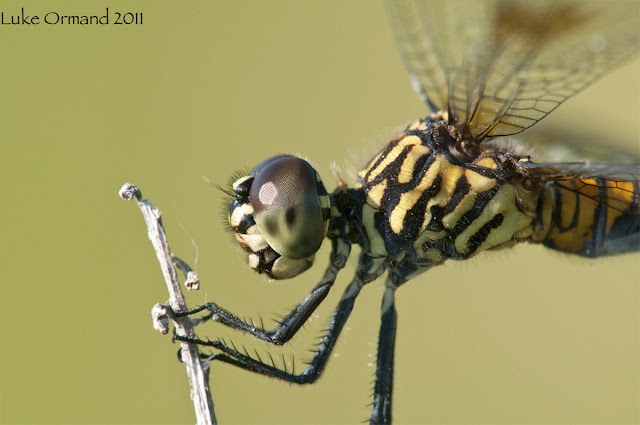
One frame had the eyes in sharp focus, the other had the body.  Together they have both!
This next shot was a little more difficult because I had moved ever so slightly so the dragonfly was actually larger in one frame then the next.  Using the free-transform tool (control/command T in PS) I reduced the size of the larger image to match the size of the smaller image.  I was able to get away with it because it was a pretty small discrepancy.
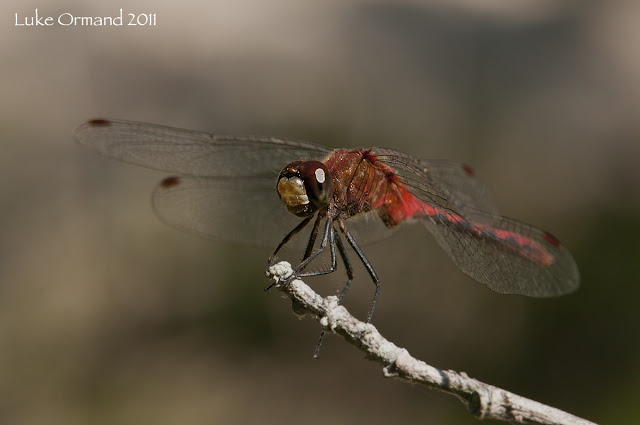
Similar to the above image, one hard the head/eyes in sharp focus, while the other image contained a sharp body.  

Thursday, December 2, 2010

Sun is Rising

Sunrise is always beautiful - and last weekend in Amagansett was no exception....Those colors are all natural and I really like the visual effect of a "squished" sun (above).  Below is another version shot at a much lower ISO (hence the darker water).  On both of these shots, the sun was completely blown out (that is, it was so bright it was rendered as white in the image).  I filled it in using the fringing colors of the sun and used a desaturation sponge to increase the brightness for a more real effect.

A more "abstract" shot:


Here is an image of a Grey Seal that was released by the Riverhead Foundation over the summer which I recently processed to round things out!

Tuesday, November 9, 2010

Dreamy look continues


I couldn't resist a few more images done to dreamy perfect....


Monday, November 8, 2010

Flower Effects


I was processing an image of a flower recently and wanted to make it really glow... but how?  I re-called an image of a crocus that a fellow photographer friend of mine had showed me not too long ago and wanted to duplicate that effect, so I sent him an e-mail and it turns out I'm not the only one who has wondered.  He shared this blog post with me that makes it ridiculously easy to create this effect and clearly I was eager to try it out tonight... enjoy.


Thursday, September 23, 2010

First Fall Sunset

Well I came up empty handed after waiting on some Kestrels for 30 minutes - but when I turned around I saw this beautiful sunset over the farm fields of Aquebogue.  It worked out well that I had my telephoto lens on as there was some farm equipment just below the bottom of the frame so a wide-angle would likely have not worked well.  Earlier in the week I had photographed this Groundhog in the same field.

And here is another photo of the sunset but with the farm equipment included (taken in a vertical format) which I think does not compare to the top post.

Sunday, September 19, 2010

Praying Mantis and other critters


An unsuccessful morning at Jones Beach West End (due to the enormous numbers of mosquitoes who would swarm my vehicle as soon as I stopped) I headed to the South Fork Natural History Museum (also known as SoFo) because a rare bird had been reported the day before and there is potential for a lot of other birds and animals.  The grasslands and ponds behind the museum did not disappoint and I recommend to anyone who lives on the east end (or anywhere on Long Island for that matter) to visit museum and walk the wide trails behind.  The muskrat pictured below had no problem with me sitting on the shoreline of the pond and literally swam right up to me.

A close-up:

The real impressive thing in the fields however was the variety of insects.  I couldn't believe there weren't more birds hawking or catching them (only one kestrel was on duty to eat the big grasshoppers). Here is a bee-fly enjoying the nectar of a goldenrod flower.

This ladybug was calling a milkweed plant home for the morning:

The most exciting critter find for me however was when a male praying mantis fluttered in front of me in a patch of burnweed.  This insect is the largest on Long Island and is seldom seen (I believe this is only the 3rd one I've come across in the field over the last few years).  While I was admiring this bugs size and wild looks, two women stopped and asked what I was taking pictures of.  One of the women was Sandra Ferguson who is the President of the Friends of the Long Pond Greenbelt - a great organization that works on preserving the natural wonders that make up the Long Pond Greenbelt - stretching from Sag Harbor and the beginning of Ligonee Creek down through Sagaponack to the Atlantic Ocean.  I have had many beautiful hikes in this greenbelt and come away with a lot of great photos - and it's people like Sarah who ensure these opportunities will be available for generations to come.

And another up-side down view: